

About the Keynote Speaker
 Professor Lawrence H. Summers is the Charles W. Eliot University Professor and President Emeritus of Harvard University. During the past three decades, he has served in a series of senior policy positions in Washington, D.C., including the 71st Secretary of the Treasury for President Clinton, Director of the National Economic Council for President Obama and Vice President of Development Economics and Chief Economist of the World Bank.
He received a Bachelor of Science degree from the Massachusetts Institute of Technology in 1975 and was awarded a PhD from Harvard in 1982. In 1983, he became one of the youngest individuals in recent history to be named as a tenured member of the Harvard University faculty. In 1987, Dr Summers became the first social scientist ever to receive the annual Alan T. Waterman Award of the National Science Foundation (NSF), and in 1993 he was awarded the John Bates Clark Medal, given every two years to the outstanding American economist under the age of 40.
He is currently the Charles W. Eliot University Professor at Harvard University and the Weil Director of the Mossavar-Rahmani Center for Business & Government at Harvard’s Kennedy School. He and his wife Elisa New, Host and Director of PBS’s Poetry in America, reside in Brookline and have six children.
With an Introduction by
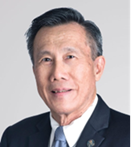 Dr Teh Kok Peng is the current Chairman of the East Asian Institute at the National University of Singapore (NUS), succeeding Professor Wang Gungwu in 2018.
Before his retirement in 2011, Dr Teh served as President of GIC Special Investments from April 1999 to June 2011, and oversaw investments in private equity, infrastructure and international venture funds. Prior to this, he was concurrently Deputy Managing Director of the Monetary Authority of Singapore and Deputy Managing Director of GIC. He began his career with the World Bank, joining its Young Professionals Programme in 1975.
Dr Teh was formerly Chairman of Ascendas Pte Ltd and Azalea Asset Management Pte Ltd. He was a member on various boards, including China International Capital Corporation, Oversea-Chinese Banking Corporation, Taikang Life Insurance, Sembcorp Industries, Singapore Life Ltd, and the Urban Redevelopment Authority. Dr Teh’s contributions also encompassed the higher education sector, where he served on the boards of the NUS, Lee Kuan Yew School of Public Policy, and Institute of Policy Studies. Additionally, he was President of the Economic Society of Singapore from 1992 to 1997, succeeding the late Professor Lim Chong Yah.
Dr Teh currently chairs the Advisory Boards of Granite Asia and Seraya Partners. He is also on the boards of Seviora Holdings, Fullerton Health and CM Capital Corporation.
Dr Teh obtained First Class Honours in Economics at La Trobe University, Melbourne, and a Doctorate in Economics at Nuffield College, Oxford University, England. He attended the Advanced Management Program at the Harvard Business School in the fall of 1989.
About the Speakers and Chairpersons (in order of presentation)
 Professor Alfred Schipke is the director of the East Asian Institute and Professor of the Practice of International Finance at the Lee Kuan Yew School of Public Policy at National University of Singapore (NUS). Before joining NUS, he was Director of the International Monetary Fund–Singapore Regional Training Institute for Asia and the Pacific in charge of technical assistance, training and research. Prior to that he was Assistant Director and Mission Chief for India and Senior Resident Representative and Mission Chief for China providing policy advice, spearheading analytical work, and coordinating capacity development. He has worked closely with key Chinese economic and financial sector agencies including the People’s Bank of China, the Ministry of Finance, and the financial sector regulatory agencies.
At the IMF, he was also division chief in the Asia and Pacific Department leading the department’s work on fast-growing low-income countries in Southeast Asia (Frontier Economies) and was Mission Chief for Vietnam. In the IMF’s Western Hemisphere Department, he negotiated several successful IMF programs including for El Salvador and St. Kitts and Nevis.
He has taught international finance at Harvard Kennedy School and the National School of Development at Peking University and has authored and edited several books and articles. He holds a PhD from Duisburg-Essen University, an MPA from Harvard, and a BA from Indiana University of Pennsylvania.
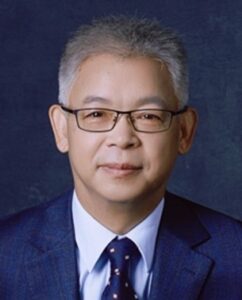 Professor Huang Yiping is PKU Boya Distinguished Professor, Dean of the National School of Development, and Director of the Institute of Digital Finance, the Peking University. Currently, he is also Deputy Secretary-General of the China Society of Finance and Banking, Chairman of the Special Committee on Fintech Development and Research of the National Internet Finance Association of China, Chairman of the Academic Committee of the China Finance 40 Forum, a member of the Chinese Economists 50 Forum, Editor of China Economic Journal, an Associate Editor of Asian Economic Policy Review, an independent director of the Ant Group and the China Life Insurance. His key research interests are macro economy and financial policy.
Previously, he served as a member of the Monetary Policy Committee at the People’s Bank of China between 2015 and 2018. He was also a policy analyst at the Research Center for Rural Development of the State Council, Senior Lecturer at the Australian National University, General Mills International Visiting Professor of Economics and Finance at the Columbia Business School, Managing Director and Chief Asia Economist for Citigroup, Managing Director and Chief Economist for Emerging Asia for Barclays.
Prof Huang received his Bachelor of Agricultural Economics from Zhejiang Agricultural University, Master of Economics from Renmin University of China and PhD in Economics from Australian National University.
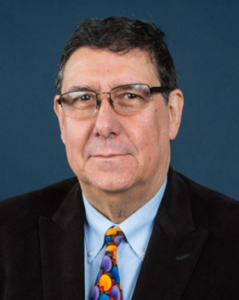 Professor Anthony Saich is the Director of the Rajawali Foundation Institute for Asia and the Daewoo Professor of International Affairs. He teaches courses on comparative political institutions, democratic governance, and transitional economies, with a focus on China. In his capacity as Institute Director, Saich also serves as the faculty chair of the China Programs, the Asia Energy Leaders Program, Unseen Legacies of the Vietnam War and the Global Vietnam Wars Studies Initiative.
Prof Saich first visited China as a student in 1976 and continues to visit each year. Currently, he is a guest professor at the School of Public Policy and Management at Tsinghua University, China. He also advises a wide range of government, private, and nonprofit organizations on work in China and elsewhere in Asia.
He has served as a trustee of the National Committee on US-China Relations (2014–2020), chair of the China Medical Board (2015–2019), and currently sits on the boards of AMC Entertainment Inc. and International Bridges to Justice. Prof Saich is also the US Secretary-General of the China-United States Strategic Philanthropy Initiative and sits on Harvard’s executive committees for the John King Fairbank Center for Chinese Studies, the Council on Asia Studies, and the Asia Center.
Prof Saich’s current research explores politics and governance in post-Mao China and philanthropy in China. His most recent books include From Rebel to Ruler: One Hundred Years of the Chinese Communist Party (2021) and Finding Allies and Making Revolution (2020). He holds a PhD from the Faculty of Letters, University of Leiden, the Netherlands. He received his master’s degree in politics with special reference to China from the School of Oriental and African Studies, London University, and his bachelor’s degree in politics and geography from the University of Newcastle, UK.
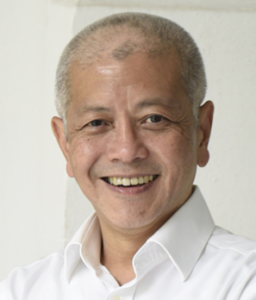 Professor Danny Quah is Li Ka Shing Professor in Economics and Dean at the Lee Kuan Yew School of Public Policy, NUS. He works on world order, economic growth and development, and inequality and income mobility. In his research on world order, Quah analyses the supply and demand of international systems, contrasting the goals of the Great Powers and the needs of the global community. Through academic research, public commentary, and as a member of World Bank President’s Economic Advisory Panel and other public commissions, as well as in advisory roles at World Economic Forum, UNDP, government agencies and ministries, and elsewhere, Quah seeks to help shape global economic and geopolitical discourse. He is the author of “The Global Economy’s Shifting Centre of Gravity.”
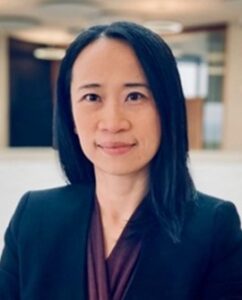 Professor Yeling Tan is Professor of Public Policy at the Blavatnik School of Government. She is also a non-resident senior fellow at the Peterson Institute for International Economics.
Her research focuses on the political economy of globalisation, development, and policymaking, with a focus on China and the Asian region. She holds a PhD in Public Policy and an MPA in International Development from Harvard University, and a BA in International Relations and Economics from Stanford University. Prior to joining Oxford, Professor Tan was an assistant professor of political science at the University of Oregon and a postdoctoral research fellow at Princeton University. She has also worked in the public and non-governmental sectors on a range of issues including economic development, international security policy, global governance and governance innovations.
Professor Tan’s latest book is Disaggregating China, Inc: State Strategies in the Liberal Economic Order (Cornell University Press Studies in Political Economy), which has been awarded the Peter Katzenstein book prize and the Georgetown Joseph S. Lepgold book prize. Her articles have been published in Comparative Political Studies, the Review of International Organizations, International Studies Quarterly, the China Journal, Governance, and Global Policy. Professor Tan’s earlier books include China Experiments: from Local Innovations to National Reform (Brookings Institution Press) and Asia’s Role in Governing Global Health (Routledge). Professor Tan has also written for Foreign Affairs, Foreign Policy and Bloomberg Opinion.
 Professor Rana Mitter is ST Lee Chair in US-Asia Relations at the Harvard Kennedy School. He is the author of several books, including Forgotten Ally: China’s World War II (2013) which won the 2014 RUSI/Duke of Westminster’s Medal for Military Literature, and was named a Book of the Year in the Financial Times and Economist. His latest book is China’s Good War: How World War II is Shaping a New Nationalism (Harvard, 2020).
His writing on contemporary China has appeared recently in Foreign Affairs, the Harvard Business Review, The Spectator, The Critic, and The Guardian. He has commented regularly on China in media and forums around the world, including at the World Economic Forum at Davos. His recent documentary on contemporary Chinese politics “Meanwhile in Beijing” is available on BBC Sounds. He is co-author, with Sophia Gaston, of the report “Conceptualizing a UK-China Engagement Strategy” (British Foreign Policy Group, 2020). He won the 2020 Medlicott Medal for Service to History, awarded by the UK Historical Association. He previously taught at Oxford and is a Fellow of the British Academy.
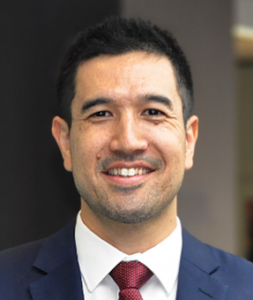 Professor Shiro Armstrong is Professor of Economics and Director of International Partnerships at the Crawford School of Public Policy in the College of Asia and the Pacific at the Australian National University. He is Director of the Australia-Japan Research Centre, Editor of the East Asia Forum, and Director of the East Asian Bureau of Economic Research. He is also a Visiting Professor at Keio University, Research Associate at the Center on Japanese Economy and Business at the Columbia Business School, Visiting Lecturer at the University of Tokyo, Non-resident Fellow at the Research Institute of Economy, Trade and Industry, Japan and Research Associate at the New Zealand Asia-Pacific Economic Cooperation Study Centre.
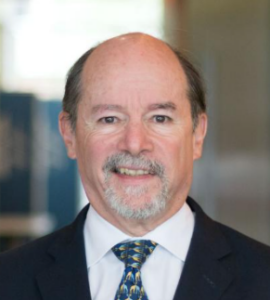 Professor Robert Z. Lawrence is Albert L. Williams Professor of International Trade and Investment, a Senior Fellow at the Peterson Institute for International Economics, and a Research Associate at the National Bureau of Economic Research. He currently serves as Faculty Chair of The Practice of Trade Policy executive program at Harvard Kennedy School. He served as a member of the President’s Council of Economic Advisers from 1998 to 2000. Prof Lawrence has also been a Senior Fellow at the Brookings Institution. He has taught at Yale University, where he received his PhD in Economics. His research focuses on trade policy.
He is the author of Crimes and Punishments? Retaliation under the WTO; Regionalism, Multilateralism and Deeper Integration; Single World, Divided Nations?; and Can America Compete? He is coauthor of Has Globalization Gone Far Enough? The Costs of Fragmentation in OECD Markets (with Scott Bradford); A Prism on Globalization; Globaphobia: Confronting Fears About Open Trade; A Vision for the World Economy; and Saving Free Trade: A Pragmatic Approach.
Prof Lawrence has served on the advisory boards of the Congressional Budget Office, the Overseas Development Council, and the Presidential Commission on United States Pacific Trade and Investment Policy.
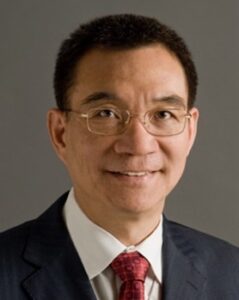 Professor Justin Yifu Lin is Dean of Institute of New Structural Economics, Dean of Institute of South-South Cooperation and Development and Professor and Honorary Dean of National School of Development at Peking University. He was the Senior Vice President and Chief Economist of the World Bank, 2008-2012.
Prior to this, Prof Lin served for 15 years as Founding Director and Professor of the China Centre for Economic Research (CCER) at Peking University. He is Councillor of the State Council and a member of the Standing Committee, Chinese People’s Political Consultation Conference. He is the author of more than 20 books including Beating the Odd: Jump-starting Developing Countries; Going Beyond Aid: Development Cooperation for Structural Transformation, the Quest for Prosperity: How Developing Economies Can Take Off, New Structural Economics: A Framework for Rethinking Development and Policy, Against the Consensus: Reflections on the Great Recession, and Demystifying the Chinese Economy. He is a Corresponding Fellow of the British Academy and a Fellow of the Academy of Sciences for Developing World.
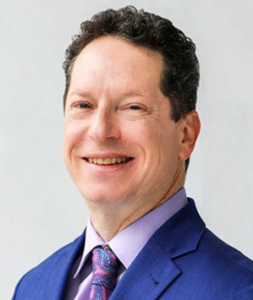 Dr Scott Kennedy is Senior Adviser and Trustee Chair in Chinese Business and Economics at the Center for Strategic and International Studies (CSIS). A leading authority on Chinese economic policy and US-China commercial relations, he has been traveling to China for 36 years. Ongoing areas of focus include China’s innovation drive, Chinese industrial policy, US-China relations, and global economic governance.
His articles have appeared in a wide array of policy, popular, and academic venues, including the New York Times, Wall Street Journal, Foreign Affairs, Foreign Policy, and China Quarterly. Major publications include: US-China Scholarly Recoupling: Advancing Mutual Understanding in an Era of Intense Rivalry (CSIS, March 2024); (with Wang Jisi) Breaking the Ice: The Role of Scholarly Exchange in Stabilizing US-China Relations (CSIS, 2023); China’s Uneven High-Tech Drive: Implications for the United States (CSIS, 2020); Global Governance and China: The Dragon’s Learning Curve (Routledge, 2018); The Fat Tech Dragon: Benchmarking China’s Innovation Drive (CSIS, 2017); and The Business of Lobbying in China (Harvard University Press, 2005).
Dr Kennedy hosts the “China Field Notes” podcast, which features voices from on the ground in China, and the Trustee Chair co-runs the “Big Data China” initiative, which introduces pathbreaking scholarly research about China’s economy to the policy community.
From 2000 to 2014, Dr Kennedy was a professor at Indiana University (IU), where he established the Research Center for Chinese Politics & Business and was the founding academic director of IU’s China Office. Dr Kennedy received a PhD in Political Science from George Washington University, his MA from the Johns Hopkins School of Advanced International Studies, and his BA from the University of Virginia.
 Dr Nils Redeker is Deputy Director of the Jacques Delors Centre and leads its policy work on European economic policy. In his own work, he mainly focuses on European fiscal- and economic policy, reforms of the EU’s economic governance, and the role of Germany in the EU. Before joining the think tank world, Dr Redeker taught courses in Political Economy at the University of Zurich and was a Visiting Fellow at the Weatherhead Center for International Affairs at Harvard University. He has also worked as an external consultant for the former president of Germany Horst Köhler. Dr Redeker studied political science and economics at the Free University Berlin and the London School of Economics and did a PhD on economic imbalances within the Eurozone at the University of Zurich.
 Mr Nguyen Xuan Thanh is a Senior Lecturer in Public Policy at the Fulbright School of Public Policy and Management. His research interests include macroeconomic policy and financial sector reform.
Mr Nguyen was a member of the Vietnamese Prime Minister Economic Advisory Council from 2018 to 2021. From June 2013 to March 2016, he was the Director of the Fulbright Economic Teaching Program, which was transitioned into Fulbright University Vietnam in 2016.
From 2006 to 2023, Mr Nguyen was a senior fellow at the Ash Center for Democratic Governance and Innovation, Harvard Kennedy School, Harvard University. At Harvard, he worked on comparative public policy issues in Vietnam and Southeast Asia and coordinated the Vietnam Executive Education Program.
Prior to joining Fulbright, Mr Nguyen was an official of the Ho Chi Minh City People’s Committee.
 Professor Meg Rithmire is the James E. Robison Professor in the Business, Government, and the International Economy Unit at Harvard Business School, where she has taught since 2011. She holds a PhD in Government from Harvard University, and BA in Chinese Studies and International Studies from Emory University. Her expertise is in political economy and international relations, with a focus on Asia, China, and China and the United States.
Her first book (Land Bargains and Chinese Capitalism, Cambridge University Press, 2015) examines the role of land development and real estate in China’s economic development. Her second book (Precarious Ties, Oxford University Press, 2023) compares state-business relations and financial liberalization in China, Malaysia, and Indonesia. Her work on China’s politics and economy, international financial engagements, and relationship with the US has been published in a variety of scholarly journals, and her commentary has appeared in The Atlantic, the Washington Post, Foreign Affairs, and more.
She is currently co-chairing an initiative on Business Geopolitical Risk and Readiness at the US Chamber of Commerce Foundation, and frequently speaks to business groups and government agencies about China and global business. She speaks fluent Mandarin and has spent seven years in China.
She is a two-time winner of the Harvard Business School Faculty Teaching award. She is a member of the editorial boards of the China Quarterly and the China Journal, a board member of the Belfer Center for Science and International Affairs at Harvard Kennedy School, a founding member of the Harvard University Faculty Committee on Southeast Asia, and a faculty affiliate at the Harvard Asia Center, the Fairbank Center for Chinese Studies, the Mossavar-Rahmini Center for Business and Government, and the Weatherhead Center for International Affairs. At the Weatherhead Center, she co-chairs a research initiative on “Regions in a Multipolar World,” and she runs the seminar on the Chinese economy at the Fairbank Center for International Affairs.
 Professor Christine Wong is Visiting Research Professor at the East Asian Institute, National University of Singapore; and Honorary Professorial Fellow at the Asia Institute, University of Melbourne. She held the Bank of America Merrill Lynch Visiting Chair in International Finance at the Schwarzman College at Tsinghua University in 2020-2022 and continues to teach on the program as Visiting Professor.
During 2013-2020 Prof Wong was the Founding Director of the Centre for Contemporary Chinese Studies at the University of Melbourne. Before that she was Director of Chinese Studies and Professor of Chinese Public Finance at the University of Oxford from 2007 to 2013, and Henry M. Jackson Professor of International Studies at the University of Washington during 2000-2007. She has also taught economics at the University of California campuses in Santa Cruz and Berkeley; and Mount Holyoke College.
An international authority on China’s public finance and public sector reform, Prof Wong has held senior staff positions in the World Bank and the Asian Development Bank and been a consultant for the IMF, OECD, and UNDP. She is a member of the Academic Advisory Board at the Center for Industrial Development and Environmental Governance at Tsinghua University.
Professor Wong has published widely on China’s public finance and public sector reform. Her research focuses especially on the impact of fiscal decentralization on policy implementation in education, health, social welfare, environmental protection, and urbanization.
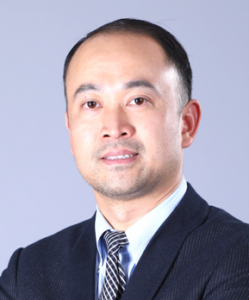 Dr Miao Yanliang joined the China International Capital Corporation (CICC) in March 2023 as Chief Strategist and Executive Head of Research Department. He is among the most sought after and influential analysts in China. Before that he has served for 10 years at China State Administration of Foreign Exchange (SAFE), including as its Chief Economist since May 2018. He joined in 2013 as Senior Advisor to the Administrator and then Head of Research. He helped formulate global macro views and built a top-notch research platform for the world’s largest sovereign wealth manager.
As Chief Economist, he also advises the senior management of SAFE and the People’s Bank of China on a range of economic and policy issues. Before SAFE, he was an economist at the International Monetary Fund (IMF) where he worked on emerging markets and then the euro area crisis including as policy coordinator for the Portugal program. Before the IMF, he was visiting the Bank of Israel in 2007 as special assistant to the Governor and taught economics at the Woodrow Wilson School of Princeton University.
Dr Miao is an adjunct professor of Peking University’s National School of Development, a member of China Finance 40 Forum, a trustee of Shanghai University and an external member of the Academic Committee of China Development Bank. He publishes extensively on global macro and occasionally as a columnist for Project Syndicate. He holds a PhD, an MA, an MPA, all from Princeton University, and an MA in economics from Fudan University.
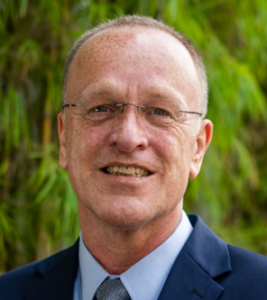 Professor Bert Hofman is professor at the East Asian Institute of the National University Singapore. He was director of EAI 2019-2023 and was a Professor of Practice at the Lee Kuan Yew School of the National University Singapore 2019-2023. He is also an Honorary Senior Fellow at the China Center of the Asia Society Policy Institute, Senior Fellow at MERICS in Germany, and Fellow of the World Association for China Studies at the China Academy of Social Sciences.
Before joining NUS in 2019, he worked with the World Bank for 27 years, 22 of which in Asia, and 12 of which on China. Mr. Hofman was the World Bank Country Director for China 2014-2019, the country economist 2004-2008, and the Chief Economist for the World Bank in the East Asia and Pacific region 2011-2014. He also worked on Indonesia, the Philippines, Korea and Mongolia, South Africa, Namibia, Zambia, Brazil, Russia, and others. Mr. Hofman also worked at the Kiel Institute of World Economics, the OECD and NMB Bank (Now ING). He studied economics in Rotterdam and Kiel. His current interests include China’s future growth trajectory, technology, geo-economics and global supply-chain shifts.
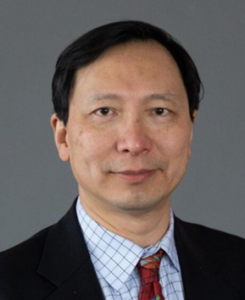 Professor Shang-Jin Wei is the NT Wang Professor of Chinese Business and Economy and Professor of Finance and Economics at Columbia University’s Graduate School of Business and School of International and Public Affairs.
During 2014-2016, Prof Wei served as Chief Economist of Asian Development Bank and Director General of its Economic Research and Regional Cooperation Department. He was ADB’s chief spokesperson on economic trends and economic development in Asia, advised ADB’s President on economic development issues, led the bank’s analytical support for regional cooperation fora including ASEAN+3 (China, Japan, and Korea) and APEC, growth strategy diagnostics for developing member countries, as well as research on macroeconomic, financial, labor market, and globalization issues.
Prior to his Columbia appointment in 2007, he was Assistant Director and Chief of Trade and Investment Division at the International Monetary Fund. He was the IMF’s Chief of Mission to Myanmar (Burma) in 2004. He previously held the positions of Associate Professor of Public Policy at Harvard University, the New Century Chair in Trade and International Economics at the Brookings Institution, and Advisor at the World Bank.
He has been a consultant to numerous government organizations including the U.S. Board of Governors of the Federal Reserve System, United Nations Economic Commission on Europe, and United Nations Development Program, the Asian Development Bank, and to private companies such as PricewaterhouseCoopers.
A leading scholar in international finance, trade, and macroeconomics and China, Prof Wei has received accolades such as the Sun Yefang Prize for Distinguished Contributions to Economics and the Zhang Peifang Prize for Contributions to Economics of Development. His work has been published in top academic journals including the American Economic Review and Journal of Political Economy and has been reported in popular media, including The Financial Times and The Wall Street Journal. Prof Wei holds a PhD in Economics and an MS in Finance from the University of California, Berkeley.
 Dr Yao Jielu is a research fellow at the East Asian Institute (EAI) at the National University of Singapore (NUS). She holds a PhD in Political Science from the University of Iowa, an MA in Economics from NUS, and a BA in International Economics and Trade from Fudan University. Prior to joining EAI, Dr Yao was a postdoctoral research fellow with Wesleyan Media Project at Wesleyan University. Her current research interests are centered on public policy and political communication in times of crisis. She has published academic papers on journals such as the Journal of Public Policy, Journal of Asian Public Policy, Journal of Health Politics, Policy and Law, Forum, Social Science Computer Review, and Media and Communication.
 Dr Zhang Bin is Deputy Director and Senior Fellow of the Institute of World Economics and Politics at the Chinese Academy of Social Sciences, and a member of the 14th National Committee of the Chinese People’s Political Consultative Conference. His main research areas focus on China and global macroeconomics, with particular attention to the structural transformation of the Chinese economy, China and global macroeconomic issues, Renminbi exchange rates, and monetary policy. He has published over fifty papers in China’s top academic journals such as China Social Sciences, Economic Research, World Economy, Economics Quarterly, and Management World. Additionally, he has written more than two hundred columns and commentary articles in domestic and international media outlets including the People’s Daily, Financial Times, Reuters, Caijing, Caixin, and Southern Weekend.
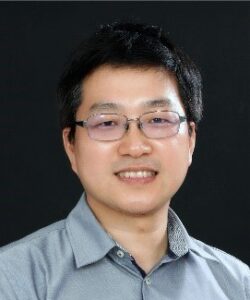 Professor Yong Wang is currently a Tenured Associate Professor of Economics, Deputy Dean of the Institute of New Structural Economics at Peking University. Before joining PKU, he worked at the Department of Economics at Hong Kong University of Science and Technology (HKUST) and the World Bank.
Prof Wang obtained his PhD in Economics from the University of Chicago. His main research fields are Economic Growth, Macro Development, China and India’s Economy and Political Economy. He publishes academic papers on journals including Journal of Development Economics and Journal of Monetary Economics, and is an author of eight books including Thoughts and Debates on New Structural Economics (Peking University Press).
Prof Wang serves as an Associate Editor for China and the World Economy (SSCI) and Economic Modelling (SSCI). He is a recipient of the First Prize of National Academic Research in Humanities and Social Sciences in Chinese Universities by the Ministry of Education of China (2020), the Inaugural Peikang Chang Young Scholar Award in Development Economics (2018), China Young Economist Award (2017), Franklin Best Teaching Award at HKUST(2014), and the Martin and Margaret Lee Prize in Price Theory of at the University of Chicago (2004). Yong has been invited to present his research at policy institutions such as IMF, World Bank, Asian Development Bank, US Department of State, US Department of Treasury, National Development and Reform Commission of China, and Korea Institute of Finance. He also serves as Secretary General of the New Structural Economics Research Alliance and Consultant of the World Bank.
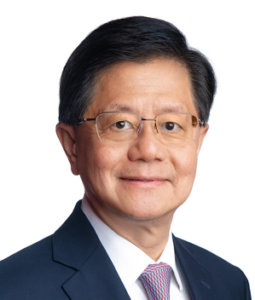 Professor Bernard Yeung is a Visiting Chair Professor, Dean’s Advisor, and China’s Ministry of Education appointed Changjiang (Yangtze River) Scholar at the Southern University of Science and Technology (SUSTech) (Aug 2023 – ). He is also Emeritus and Founding President of the Asian Bureau of Finance and Economics Research and Emeritus Professor at the National University of Singapore (NUS) Business School.
From 2008 to 2023, Prof Yeung was the Stephen Riady Distinguished Finance and Strategic Management Professor at the NUS Business School. He was also the President of the Asian Bureau of Finance and Economic Research from 2003 to 2023. He was Dean of NUS Business School from June 2008 to June 2019. Before joining NUS, he was the Abraham Krasnoff Professor in Global Business, Economics, and Management at New York University (NYU) Stern School of Business and the Director of the NYU China House. From 1988 to 1999, he taught at the University of Michigan and the University of Alberta from 1983 to 1988.
Prof Yeung has published widely cited work in top-tier academic journals covering finance, economics, strategy, and international business. He has more than 33,000 citations.
He was awarded the Public Administration Silver Medal (2018) in Singapore, the Irwin Outstanding Educator Award (2013) from the Academy of Management, and is an elected Fellow of the Academy of International Business.
Prof Yeung was a member of the Economic Strategies Committee in Singapore (2009), a member of the Social Science Research Council (SSRC) in Singapore (2016-2018), and a member of the Financial Research Council of the Monetary Authority of Singapore (2010 -2013).
Prof Yeung sits on the Advisory Committee of the NUS East Asian Institute, the Advisory Committee of the Institute of Economics, Academia Sinica, and the Academic Committee of the Hong Kong Academy of Industry and Innovation. He also serves as an Independent Non-Executive Director of the Bank of China (BOC) Aviation Limited since 2016, and the Advisory Board of Healthway Medical Corporation Ltd (2018-2023).
Prof Yeung received his Bachelor of Arts in Economics and Mathematics from the University of Western Ontario and his MBA and PhD degrees from the Graduate School of Business at the University of Chicago.
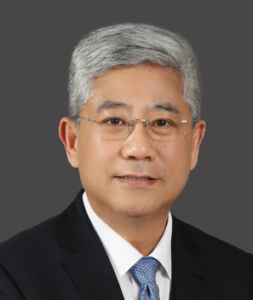 Professor Chong-En Bai is Dean of the School of Economics and Management and Distinguished Professor of Arts, Humanities and Social Sciences of Tsinghua University. He earned his PhD degree in Economics from Harvard University. His research focuses on the relationship between economic institutions, policy, and development, and from this perspective, the Chinese economy.
Prof Bai is Vice-Chairman of the 13th All-China Federation of Industry and Commerce. He is a member of the National Committee of the Chinese People’s Political Consultative Conference, the “14th Five-Year Plan” National Development Planning Expert Committee, the Chinese Economists 50 Forum, the China Finance 40 Forum, and ChinaInfo 100. He is also Chairman of Academic Committee of China Wealth Management 50 Forum. He was a member of the monetary policy committee of the People’s Bank of China and of the executive council of International Economic Association, a non-resident Senior Fellow of the Brookings Institution, and Adjunct Vice-President of Beijing State-Owned Assets Management Co., Ltd..
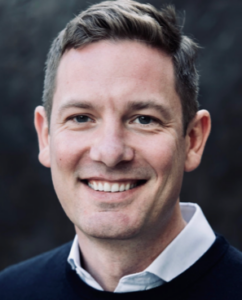 Dr Jonas Nahm is Associate Professor at the Johns Hopkins School of Advanced International Studies (SAIS). His research focuses on comparative political economy, exploring the intersection of climate policy, environmental politics, and economic and industrial policy.
Dr Nahm examines clean energy transitions, such as renewable energy adoption and the electrification of the global auto sector, as dynamic processes reshaping domestic and international politics. His work analyzes state responses to climate change and identifies obstacles to government-led decarbonization efforts.
Building on insights from comparative politics and political economy, his research investigates how economic coalitions, particularly firms, influence the dynamics of clean energy transitions. These transitions provide unique laboratories for theoretical exploration, blending rapid technological change, interest group conflicts between emerging industries and legacy sectors, and heightened state intervention.
Dr Nahm’s book, Collaborative Advantage: Forging Green Industries in the New Global Economy (Oxford University Press, 2021), examines the development of the wind and solar industries, emphasizing international collaboration in innovation and supply chains. The book received the American Political Science Association and International Studies Association awards for excellence in political economy and science policy.
Before joining SAIS, Dr Nahm was a Postdoctoral Fellow at Brown University’s Watson Institute. He holds a PhD in Political Science from the Massachusetts Institute of Technology.
 Dr Tian Jietang is Director General, Department of Industrial Economy, Development Research Centre of the State Council, China. A Research Fellow with a PhD in Economics, Dr Tian has long been engaged in policy research on industrial development, technological innovation, and the digital economy. He is an expert receiving special allowance of the State Council. He has won several awards, including multiple China Development Research Awards across various tiers and the inaugural Technology Economics Award from the Chinese Society of Technology Economics. He also holds the position of Standing Director at the Chinese Society of Technology Economics.
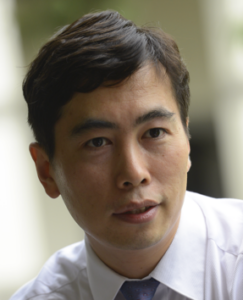 Dr Bo Chen (PhD, Simon Fraser University) is Senior Research Fellow at the East Asian Institute of the National University of Singapore. Additionally, he is a Research Associate at the Federal Reserve Bank of Dallas and a Distinguished Fellow at the Jack Austin Center.
Dr Chen’s research interests lie in international economics, development economics, and China’s economy. He has published more than 30 peer-reviewed papers in renowned economic journals such as the Journal of International Economics, Journal of Comparative Economics, Economics Letters, and the World Economy.
Dr Chen also provides insights on a wide range of China’s economic issues, including Political Free Trade Zones/Ports of China, the Belt & Road Initiative, and Macroeconomic Dynamics. He has been invited to give talks at the Ministry of Treasury and the Ministry of Commerce of China, as well as the State-owned Assets Supervision and Administration Commission of the State Council. His opinions have appeared in various mainstream media outlets such as China Central Television, Xinhua Media, Lianhe Zaobao, BBC, The Economist, and the Wall Street Journal. In addition to advising the central/federal governments of China, Canada, and New Zealand, Dr Chen has also provided consultations to many leading business groups and think tanks, including the Goldman Sachs Group, the Hong Kong and Shanghai Banking Corporation, Deutsche Bank, BAML, Citi Bank, BMW, Huawei, the Asian Society, the Rhodium Group, and CEPII.
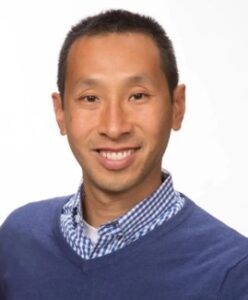 Professor Mark Wu is the Henry L. Stimson Professor at Harvard Law School, where he specializes in international trade and international economic law. His writings cover a broad range of topics, including the impact of emerging economies on global governance, digital technologies, trade remedies, environment, and foreign investment.
In addition, Prof Wu serves as the Faculty Director for the Fairbank Center for Chinese Studies at Harvard University and as a Faculty Co-Director of the Berkman Klein Center for Internet and Society. He is affiliated with several university centers including the Asia Center, Center for the Environment, Center for International Development, East Asian Legal Studies, and the Harvard Environmental Economics Program. He previously served as the Vice Dean for Graduate Program and International Legal Studies at Harvard Law School. He is a past recipient of the Sacks-Freund Award and the HLS Student Government Teaching and Advising Award.
In 2021, Prof Wu served as a Senior Advisor to the United States Trade Representative (USTR) while on leave from Harvard. He also served previously as a member of the agency review team for the Biden-Harris transition team. Earlier in his career, he served as the Director for Intellectual Property at the Office of the USTR, where he was the lead negotiator for the IP chapter of several U.S. free trade agreements.
Prof Wu has presented his research before several international organizations including the G20, OECD, UNCTAD, World Bank, and World Trade Organization (WTO). He is a past member of the World Economic Forum’s Global Futures Council for Trade and Foreign Direct Investment and of the Advisory Board of the WTO Chairs Programme.
Prof Wu began his career as an economist and operations officer at World Bank in China. He later worked as a management consultant at McKinsey & Company. He also served as a law clerk to Judge Pierre Leval of the U.S. Court of Appeals for the Second Circuit.
Prof Wu received his JD from Yale Law School. He earned a M.Sc. in Development Economics from Oxford University as a Rhodes Scholar. He received his A.B. summa cum laude in Social Studies and East Asian Studies from Harvard University.
 Dr Kenneth Kang is a Deputy Director in the Strategy, Policy and Review Department of the International Monetary Fund (IMF), covering issues related to global surveillance, trade, capital flows, macrofinancial policies, and digital money. Previously he worked in the Asia and Pacific and the European Departments, covering China, the Euro Area, India, Indonesia, Italy, Japan, Korea, and the Netherlands, and served as the IMF’s Resident Representative in Korea during 2003-06. He has a PhD from Harvard University.
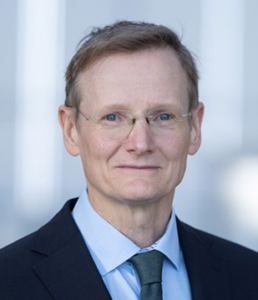 Dr Ludger Schuknecht serves as Vice President and Corporate Secretary at the Asian Infrastructure Investment Bank (AIIB). He is responsible for AIIB’s relations with its Members, the Board of Governors, the Board of Directors, other aspects of governance including the admission of new Members and the integrity of the Bank’s governance. He also oversees how the Bank communicates with key external stakeholders and has supervision over its awareness-building and brand and reputation management efforts to promote understanding of the Bank’s operations and mission among internal and external audiences.
Before joining AIIB in August 2021, he held important leadership posts at the national and international levels. Most recently, he was a Visiting Professor at the Lee Kuan Yew School of Public Policy, Singapore. Prior to this role, he was Deputy Secretary-General at the Organization for Economic Co-operation and Development (OECD) and was previously Chief Economist and Director General of Germany’s Federal Finance Ministry. In this position, he served as the G20 Finance Deputy for Germany and Co-chair of the Infrastructure Investment Working Group of the G20.
Dr Schuknecht has extensive experience working with international financial institutions, including the International Monetary Fund (IMF), the European Central Bank and the World Trade Organization. He also acted as the Chief Negotiator for Germany in the founding of AIIB, making him one of the architects of AIIB and one of the drafters of its Articles of Agreement.
He holds a Vordiplom in Economics from Ludwig Maximilian University of Munich, Germany; an MA in Economics from George Mason University, USA; and a Ph.D in Economics and a Habilitation in Economics from Universität Konstanz, Germany. Schuknecht is from Germany.
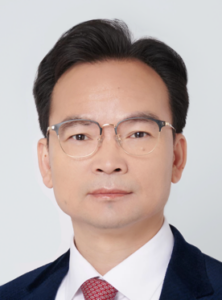 Professor Tu Xinquan is Dean, Professor and WTO Chair Holder at the China Institute for WTO Studies of the University of International Business and Economics located in Beijing, China. He got his PhD in international trade from this university in 2004. He had been a visiting scholar at Johns Hopkins University (2006), Korea Institute for International Economic Policy (2009), WTO Secretariat (2011), German Institute of International and Security Affairs (2014), Middlebury Institute of International Studies at Monterey (2016). His research and teaching focus on Chinese trade policy, WTO, US trade policy, and US-China trade relations. He is a member of Friends of Multilateralism Group, Asia WTO Research Network, Trade and Investment Research Network and General-Secretary of NITIS.
He authored China’s position, role and strategy in the WTO (published by The Press of UIBE, 2005), The forty years of China’s reform and opening up and China’s integration into world trading system (published by The People’s Press, 2019) and published a number of papers and chapters in books. He has been granted a number of research projects by the China Social Science Foundation, the Ministries of Commerce, Education, Finance etc. He was also interviewed by CCTV, Phoenix TV, Bloomberg, Reuters, Xinhua News Agency, and other major media on hot issues about China’s trade and economic situation and China’s international economic relations.
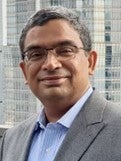 Professor P.S. Srinivas (Srini) is Visiting Research Professor at the East Asian Institute, National University of Singapore (NUS). Before joining NUS in 2021, he worked with the New Development Bank in Shanghai, China as Director General, Front Office of the President. Prior to the NDB, he worked at the World Bank in Washington DC, USA for twenty years in a variety of technical and leadership roles in financial and private sector development in the Latin America and Caribbean, South Asia, and East Asian & the Pacific Regions.
He began his international career at the Asian Development Bank, Manila, Philippines and his professional career at the Industrial Credit and Investment Corporation of India in Mumbai, India. Having worked in over thirty countries, including in China, Indonesia, India, and the Philippines, over the past three decades, Prof Srinivas has extensive experience in advising governments around the world at the senior-most levels on a variety of development issues.
Prof Srinivas has taught Finance and Public Policy at the Indian School of Business in Hyderabad, India for six years as Associate Professor and Visiting Professor. His current work on China focuses on its financial sector, Renminbi internationalization, and its role as a global creditor, plus global financial architecture reforms and innovations in climate finance.
Prof Srinivas holds PhD and MA degrees from Cornell University; an MBA from the Indian Institute of Management; and a B. Tech in Chemical Engineering from the Indian Institute of Technology.
 Professor Yasheng Huang holds the Epoch Foundation professorship of Global Economics and Management at the Massachusetts Institute of Technology (MIT) Sloan School of Management. From 2013 to 2017, he served as Associate Dean in charge of MIT Sloan’s global partnership programs and its action learning initiatives. His previous appointments include faculty positions at the University of Michigan and at Harvard Business School.
Prof Huang is the author of seven books in English and another six books in Chinese and of many academic papers (such as on regulatory transparency, historical autocracy, statistical falsifications, tax, financing, sectoral and regulatory biases, history of reforms and strategy, political economy of controls, etc.) His book, The Rise and Fall of the EAST: How Exams, Autocracy, Stability, and Technology Brought China Success, and Why They Might Lead to its Decline, published by Yale University Press in 2023, was selected as a Best Book of the Year in 2023 by Foreign Affairs magazine and is available in Japanese, traditional Chinese, Korean, Polish, and Bulgarian editions. His 2008 book, Capitalism with Chinese Characteristics, was selected as a Best Book of the Year in 2008 by the Economist magazine.
Outside of his academic research, Prof Huang has written for New York Times, Wall Street Journal, Financial Times, Foreign Policy and Foreign Affairs, and Project Syndicate, Caixin and Caijing. He is working on several policy projects related to US-China relations. He was one of the coauthors of MIT’s report, “University Engagement with China: An MIT Approach” and he is a co-chair of an implementation committee of that report. He is a member of a taskforce at Asia Society on US-China policy and a member of Brookings-CSIS (Centre of Strategic and International Studies) Advisory Council on advancing US-China collaboration. During 2023-2024, he was a visiting fellow at the Kissinger Institute at the Woodrow Wilson Center in Washington DC.
 Professor Zhenzhen Xie is currently a professor at the Business School of Sun Yat-sen University. Prior to this, she held positions as Associate Professor and Assistant Professor at Tsinghua University’s School of Economics and Management. Prof Xie’s research focuses on international business, corporate strategy, knowledge management and innovation, with a special focus on the context of emerging markets. Her earlier work investigates how emerging market multinational enterprises (MNEs) expand overseas and how advanced market MNEs operate in China. Her recent research looks into how MNEs react to geopolitical tensions with innovation strategies, cooperative strategies, and non-market strategies.
She has published extensively in prestigious journals like Journal of International Business Studies, Management Science, and Management and Organization Review, etc. She has also served on editorial boards and as a special issue editor for prominent academic journals, such as Journal of International Business Studies, Quarterly Journal of Management, International Journal of Technology Management, etc.
She is currently an Executive Director of the Technology Incubation and Innovation Ecology Branch of the China Society of Technology Economics. Her contribution to the field is further highlighted by her active involvement in significant research projects funded by national and international bodies.
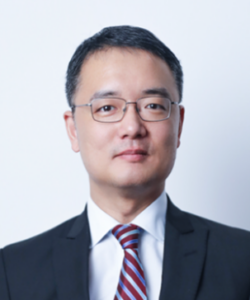 Dr Guo Kai is Executive President and Senior Fellow of the China Finance 40 Forum (CF40 Institute). Before joining CF40 Institute, Dr Guo was an economist at the International Monetary Fund in Washington DC and then worked at the People’s Bank of China in various capacities, including in the Monetary Policy Department and the International Department. His main research areas include the Chinese economy and its macroeconomic policies as well as international finance. Dr Guo is the author of three popular Chinese economics books and multiple academic papers in various English and Chinese journals. Dr. Guo holds a PhD in Economics from Harvard University.
 Professor Jianwei (Jerry) Xing is an Associate Professor of Economics at the National School of Development at Peking University. He graduated from Cornell University with a doctorate degree in Applied Economics. His research interests are environmental economics and empirical industrial organization. He is particularly interested in research topics related to electric vehicles, industrial policy, the economic consequences of environmental enhancement, and digital economy. His recent research has appeared in Journal of Environmental Economics and Management, Journal of the Association of Environmental and Resource Economists, Journal of Public Economics, and American Economic Journal: Macroeconomics.
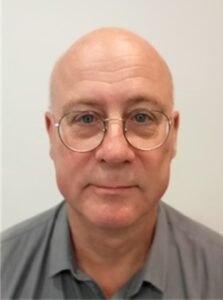 Professor Frank N Pieke (1957) is Visiting Research Professor at the East Institute in Singapore and Emeritus Professor at Leiden University. Pieke studied Cultural Anthropology and Chinese Studies first at the University of Amsterdam and subsequently at the University of California, Berkeley, where he received his PhD in 1992. After lectureships in Leiden and Oxford, he took up the Chair in Modern China studies at Leiden University in 2010.
Between 2018 and 2020, he was the Director of the Mercator Institute for China Studies in Berlin. In Oxford, Pieke set up and directed the University of Oxford’s China Centre. In Leiden, he was co-founder and first executive director of the Leiden Asia Centre. His current book project is “The rise of China and the consequences of superpower”, which asks how China’s emerging superpower status is changing China. His most recent books are The Good Communist (2009) and Knowing China (2016), both published by Cambridge University Press. In 2021, he published an edited volume together with Koichi Iwabuchi titled Global East Asia with the University of California Press.
 Mr Ashok Mirpuri joined Temasek in September 2023 and is currently Head, International Policy & Governance.
Prior to joining Temasek, Mr Mirpuri was Singapore Ambassador to the United States from July 2012 to June 2023, where he represented Singapore’s interests in working with three U.S. Administrations. His previous Ambassadorial roles were in Indonesia, Malaysia, and Australia. Mr Mirpuri has engaged with governments at the highest levels and developed policy options under challenging circumstances.
Mr Mirpuri holds a Master of Arts from the University of London’s School of Oriental & African Studies and a Bachelor of Social Science (Hons) degree in Political Science from the National University of Singapore.
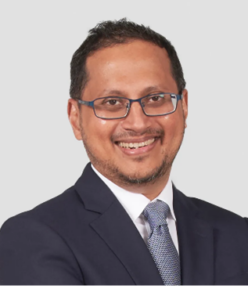 Dr Prakash Kannan is Chief Economist and Director of the Economics & Investment Strategy department at the Government of Singapore Investment Corporation (GIC). He is responsible for developing the top-down view on the investment environment as well as the asset allocation strategy for the firm. Dr Kannan joined GIC in 2012. Prior to joining GIC, he worked with the International Monetary Fund and the Central Bank of Malaysia. Dr Kannan holds a Bachelor of Science in Economics from the Massachusetts Institute of Technology and a doctorate in Economics from Stanford University.
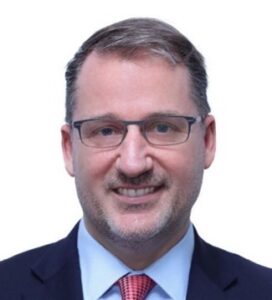 Mr Paul Haenle is Managing Director and Head of Asia Pacific Policy & Strategic Competitiveness at JP Morgan Chase & Co. He is also a Visiting Senior Research Fellow at the East Asian Institute of the National University of Singapore. He is a board member of the National Committee on US-China Relations.
Prior to joining JPMorgan, Mr Haenle held the Maurice R. Greenberg Director’s Chair at Carnegie China for 14 years. In 2009, Mr Haenle served as Director for China, Taiwan, and Mongolia Affairs on the US National Security Council under Presidents George W. Bush and Barack Obama. During his distinguished government service, he played a pivotal role as the White House representative to the US negotiating team at the six-party talks (2007–2009). Immediately preceding this, he served as a special assistant to U.S. National Security Advisors Condoleezza Rice and Stephen Hadley from 2004 to 2007.
Trained as a China foreign area officer in the US Army, Mr Haenle has been assigned twice to the US embassy in Beijing, served as a US Army company commander during a two-year tour to the Republic of Korea, and worked in the Pentagon as an adviser on China, Taiwan, and Mongolia Affairs on the staff of the chairman of the Joint Chiefs of Staff. Early assignments in the US Army included postings in Germany, Desert Storm, Korea, and Kuwait. He retired from the U.S. Army as a lieutenant colonel in October 2009. Mr Haenle received an MA in Asian studies from Harvard University, and a BS from Clarkson University.
 Mr Takehiko Nakao is currently Adviser, Sumitomo Corporation and Chairman, Center for International Economy and Strategy. He is also an executive board member (external) of the Daiichi Life Insurance, Ltd. Concurrently, he teaches as Visiting Professor at the National Graduate Institute for Policy Studies and Graduate School of Public Policy at the University of Tokyo.
He is a member of the Trilateral Commission, Board of Governors of Asian Institute of Management (Manila), the Japan Corporate Governance Network, and several other international and Japanese non-profit organizations.
Before assuming the current job on August 1, 2024, he was Chairman of the Institute at Mizuho Research & Technologies, Ltd. From April 2013 to January 2020, Mr Nakao served as President of the Asian Development Bank (ADB), which is based in Manila with membership of 68 countries including 46 regional developing countries.
Mr Nakao was the Vice Minister of Finance for International Affairs between 2011 and 2013, and in charge of foreign exchange markets, G20 and G7 processes, ASEAN+3 financial cooperation, and bilateral financial relations with the US, Asia, and other countries.
Mr Nakao has gained extensive experience in international finance, budget, tax policy, and financial markets since he joined the Ministry of Finance in 1978. He was assigned as Minister at the Embassy of Japan in Washington DC between 2005 and 2007, and worked as an advisor at the Policy Development and Review Department of the International Monetary Fund between 1994 and 1997.
He has published books and numerous papers on financial and economic issues both in Japanese and English. His memoir “The Rise of Asia: Perspectives and Beyond” covering his ADB days as well as those of Vice Minister was published by ADB in July 2022 (available on ADB HP). He also took initiative as a lead editor for “Asia’s Journey to Prosperity: Policy, Market, and Technology over 50 Years,” published by ADB in January 2020 (available on ADB HP). Mr Nakao holds a BA degree in Economics from the University of Tokyo (1978) and a Masters in Business Administration from the University of California-Berkeley (1982).
 Mr Yeo Han-koo, former trade minister of the Republic of Korea, has been senior fellow at the Peterson Institute for International Economics since June 2023. His research focuses on international trade policy, industrial policy, supply chain resilience, and economic security and international trade negotiations including the Indo-Pacific Economic Framework (IPEF) and the Comprehensive and Progressive Agreement for Trans-Pacific Partnership (CPTPP).
Mr Yeo completed almost three decades of public service as trade minister of the Republic of Korea in 2022, in the final year of the Moon Jae-in presidency.
A veteran international trade negotiator, Mr Yeo has been involved in a number of bilateral and multilateral trade negotiations, including as the chief negotiator for the Regional Comprehensive Economic Partnership (RCEP), Korea-UK Free Trade Agreement, Korea–Central America Free Trade Agreement, Korea-Indonesia Comprehensive Economic Partnership Agreement, and Korea-Philippines Free Trade Agreement. He was also an original participant in developing the Indo-Pacific Economic Framework for Prosperity.
While serving as commercial attaché at the Korean Embassy in Washington, he was involved in amendment negotiations of the Korea-US Free Trade Agreement and Section 232 steel negotiations. As Korean minister of trade, he oversaw conventional trade negotiations, export controls, and investment screening. Mr Yeo also led negotiations for Korea’s export control measures against Russia in response to Russia’s invasion of Ukraine.
A graduate of Seoul National University, Mr Yeo has served as visiting professor at the Seoul National University Business School, teaching international trade, negotiation, and economic security issues. Mr Yeo holds an MBA from Harvard Business School and an MPA from Harvard Kennedy School.
